AI adoption is picking up within workforce management. Complex global organizations need new ways to cut costs and boost efficiency.
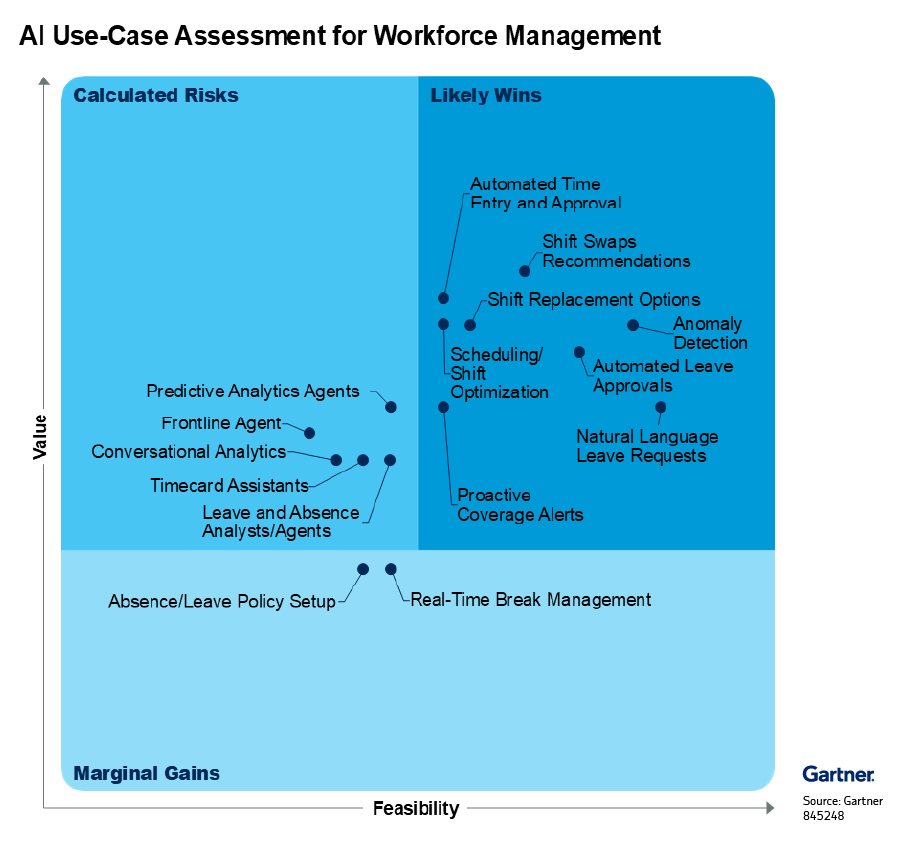
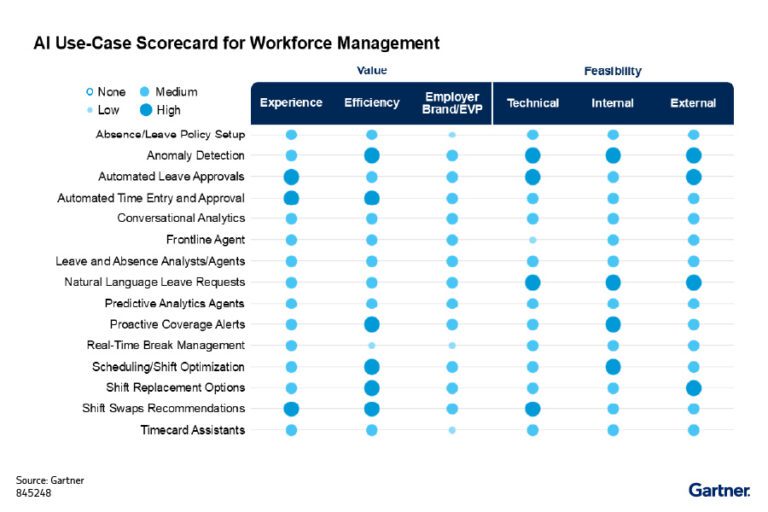
In this report, Gartner® shares an assessment of 15 workforce management AI use cases, evaluating each on feasibility and value. The report also shows how use cases were scored based on what is currently feasible and what value a typical organization could expect to realize over a 24-month period.
Gartner® evaluates key AI use cases for workforce management
Understand the best applications for AI adoption within your organization.
Key AI capabilities defined and compared based on current team feasibility and value to your organization
We believe this Gartner research underscores a shift for the future of work, highlighting capabilities that must actively deliver through automated time entry, scheduling optimization, anomaly detection and more.
Use-case scoring breakdown
In this scorecard, Gartner shows how each use case was scored against each value and feasibility dimension. Many software vendors offer automation and AI capabilities, but they may not meet your organization’s complex needs. This is something you should consider as you evaluate your current workforce management system or new systems to scale your global workforce.
High-value use cases to consider when adopting AI into your workforce management
In our opinion, the following are examples of use cases selected and positioned in the research based on an assessment by Gartner analysts. They fall within the scorecard’s highly valuable and feasible use cases based on an organization’s technical experience and the AI automation’s positive impact on efficiency once implemented. Read the report for the full use-case readout.
Automated time entry and approval
Assists with time management such as clock-in via multiple channels with geofencing, AI prompting that reduces entry clicks and automatic approvals for routine entries.
Scheduling/shift optimization
Autogenerates and maintains schedules by running thousands of scenarios based on skills, fatigue and compliance rules. Reoptimizes when employees call in sick, demand shifts, new constraints appear or overtime thresholds near.
Shift replacement options
Identifies and ranks best candidates to fill open shifts based on skills, availability, compliance, overtime impact and preferences. Simulates cost/compliance outcomes and initiates outreach through notifications or open-call lists.
Shift swap recommendations
Identifies and ranks suitable shift‑swap partners based on skills, certifications, availability, labor-rule compliance, overtime impact and team-overage needs.
Anomaly detection
Identifies missed time punches, fraud and other timekeeping exceptions, providing managers with guided prompts.
Now is the time to accelerate AI adoption and bring more value to your organization. Can your current solution support this initiative?
Identify ways your organization can adopt AI-powered workforce management.
Gartner®, AI Use-Case Assessment for Workforce Management, Josie Xing, Ron Hanscome, Kelsie Marian, Sam Grinter, Anand Chouksey, 11 February 2026 GARTNER is a trademark of Gartner, Inc. and/or its affiliates.