Learn from market-leading experts and system integrators



Today, accelerating change impacts businesses and their workforces from all directions. Labor shortages, lower barriers to switching jobs, and increased regulatory pressures for global employers make managing time and attendance processes complex and time-consuming.
Having a highly configurable workforce management solution like SAP Time and Attendance Management by WorkForce Software can help your organization maximize your labor investment, engage your workforce and improve operational efficiency, which in turn helps adapt to rapid change. Implementing this solution and realizing its benefits is a journey for any organization, and who better to help guide you than the experts!
The Expert’s Guide to Implementing SAP Time & Attendance Management offers valuable tips for success at every stage of the implementation journey from three leading experts: Accenture, Deloitte and EPI-USE. These recognized workforce management leaders have extensive experience helping organizations like yours achieve the best results from their solution investment, including reduced costs, increased productivity, increased employee engagement and improved compliance.
SAP’s global workforce management solution provider
As an SAP global partner offering solution extensions since 2015, we have more than 340 customers who are leveraging WorkForce Software solution extensions for SAP HR and payroll software, whether in the cloud or on premise. As a result of these efforts, we have co-developed integrations between SAP and WorkForce Software used by 2.1 million users globally and have a deep understanding of how the two solutions co-exist within large global organizations.
Enterprise-grade and future-ready, these SAP solution extensions from WorkForce Software will adapt to your needs, no matter how unique your pay rules, labor regulations, compliance specifications and scheduling requirements, while facilitating meaningful, in-the-moment interactions between managers and their employees, when and where they are working in the world.

Optimize workforce planning with SAP Time and Attendance Management by WorkForce Software
See a rapid return on investment by reducing payroll processing errors and overtime costs and planning more accurate workforce utilization with SAP Time and Attendance Management.
- Cloud deployment
- Rotation-based scheduling
- Time recording for projects, work orders or across departments
- Comprehensive time off and absence recording
The Implementation Journey
For the most successful implementations, you’ll need to plan ahead, communicate effectively with stakeholders and have a clear understanding of expectations from the start.
- Invest time and energy upfront into laying the groundwork before the process begins. Being proactive here will pay off in improved results, process improvement, pay accuracy and efficiency throughout the implementation journey.
- Communicate clearly and transparently with each team member to ensure they’re aware of and on board with the preparation, communication and planning required. Stakeholder alignment across operations, human resources, finance and IT, including business units and geographies, will help to avoid delays in decision-making and phase completion.
- Set realistic expectations and timelines up front to stay on track with implementation progress. A seasoned systems integrator (SI) can guide you based on their experience and help estimate time requirements.
- Define clear criteria for success and identify key decision-makers who will approve implementation progress and oversee the change management processes before moving on to the next phase.
- Understand your organization’s current systems and data storage methods. Engage subject matter experts (SMEs) involved in other data-providing or data-consuming organizational streams in requirements gathering throughout the implementation process.
Workforce management is going to touch every part of your organization every day. Communication, planning and stakeholder alignment is critical. Change management can’t be underestimated, and [you should] plan for regular check-ins throughout the implementation.
James Scott | Director of Consulting, Deloitte
The implementation process can be challenging. By focusing on staffing key roles with the right people, you can help ensure a smooth transition and reap the benefits of the new system.
- Dedicate focus separate from core HR and payroll for a specialized process like a SAP Time and Attendance Management implementation with distinct leaders, business representatives and data stakeholders who understand the practical application of business rules.
- Bring in people with a background in your existing solutions, core HR and payroll systems, and Time and Attendance to minimize silos, help data flow smoothly, and facilitate a painless transition.
- Establish roles and responsibilities with a clearly defined RACI (responsible, accountable, consulted, informed) model that guides how you communicate expectations, delegate responsibilities and maintain focus and accountability.
- Look for individuals experienced in HR, payroll and time and attendance who understand the use of labor, operational practices and areas for improvement and have strong project management, decision-making and problem-solving skillsets.
- Include employees from across all business functions, especially those who are responsible for the data going into the solution and those who are responsible for and/or use the data coming out, to help your new system meet your organization’s unique needs.
Don’t be fooled by the simple nature of a workforce management system. It’s much more than a bridge between HR and payroll, and its reach is far greater than you’d expect. Every employee feels the impact of this tool, making it a valuable asset to your organization with long-term returns. It pays to take the time to get it right.
Joel Werndorfer | WorkForce Software North America Lead, Accenture
Effective requirements gathering leads to a smoother implementation process and higher user adoption. Engage with experts across operations to consider the needs of everyday users, define success criteria, and use data to validate the system is tailored to your organization’s needs and goals.
- Involve your third-party vendors and integrations in the requirements-gathering process to help account for relevant systems your organization currently uses, establish where their data is stored, and rethink data usage to drive improved business outcomes for maximum return on your investment.
- Ensure that your field-level employees and managers have a voice in defining the solution’s scope to understand how work gets done and what daily users need to improve downstream adoption and ease change management.
- Determine what a successful implementation looks like to your organization, and align your team with the desired outcome and the right method to test for it, whether it’s process automation, labor optimization, improved workflows, increased flexibility or more rapid response to change, etc.
- Support your requirement definitions with data. Gathering input and output calculations allows you to create a common thread that flows from requirements to implementation to testing and adoption.
Gather requirements at the field level, from the people who use the systems every day, not just from the executives who are focused on the outcomes. The field personnel will be focused on how the work will get done to achieve those outcomes.
James Scott | Director of Consulting, Deloitte
These steps are essential to establishing best practices during your implementation, enabling you to achieve a high ROI, reduce product risk, and prepare for a successful go-live.
- Establish a “core global approach” across all business units, stakeholders, and locations to maintain consistency, minimize project risks, and align on policies, integrations, processes, access rights and workflows. Standardization offers the additional benefit of enabling global workforce analysis across multiple locations, regions, etc.
- Clearly define the desired end-state for your organization, what is and isn’t in scope for the project, and consider the optimal approaches to achieve it. This unified vision will help everyone stay on track toward the finish line.
- Use ROI as your guiding principle to avoid adopting unnecessary features and requirements that might complicate the implementation process, reduce automation and increase project risk.
- Focus on processes and rules that simplify ongoing maintenance while supporting the solution’s continued adaptability, reliability, cost effectiveness and benefits over time for SAP Time and Attendance Management to be most successful.
ROI is your North Star. Ask yourself, does the requirement detract from the ROI? Does it reduce automation?
Dewald La Grange | Associate Partner, EPI-USE America, Inc.
Effective communication with the right message for the right people at the right time is key to successful implementation of the SAP Time and Attendance Management.
- Communicate clearly, early, and often to help everyone understand the project’s objectives and impact on their roles and responsibilities. Create and maintain a collaborative environment to ensure buy-in and a shared sense of system value. You’ll minimize downstream delays, strengthen their confidence in the solution, and ease the transition to the new solution.
- Work collaboratively and plan regular check-ins throughout implementation to give stakeholders the necessary tools to be involved and informed project advocates and create a platform to voice their questions and concerns.
- Tailor your messages and project updates to each stakeholder group, from executives to deskless shift workers, to be relevant to each group’s responsibilities and objectives.
- Stay strategic, consistent, and creative to support effective communication. Poor communication is a primary factor in why many implementations fail. Effective communication and collaboration require thoughtful engagement with a knowledgeable project team.
Engage labor representatives early to avoid downstream delays. Give them the confidence that unionized pay policies and audit trails will be maintained, so they have the knowledge they need to advocate for the project.
Dewald La Grage | Associate Partner, EPI-USE America, Inc.
In any software implementation project, change and risk management are critical components that require attention and planning, and the SAP Time and Attendance Management implementation process is no exception.
- Establish a clear change management process that anticipates and tracks all changes, outlines a change request process, identifies acceptable updates and timelines and clearly defines roles and responsibilities to manage inevitable roadblocks. Your SI can help you explore change management options, such as building it into the staffing model or requiring change orders.
- Distinguish training from change management for effective user adoption of the solution. Training is about how to use the product, while change management involves policies, workflows and labor distributions and how changes to this affect the work they are currently doing.
- Define clear expectations for what the solution can and cannot do to avoid having a given lack of functionality be mistaken for an error. If you effectively navigate change management with clear expectations, end users will effectively adopt and trust the solution.
Document what the solution will and won’t do, both are essential for change management and trust in the solution. Set realistic expectations to avoid a lack of functionality being mistaken as solution errors.
James Scott | Director of Consulting, Deloitte
Effectively testing the implementation of SAP Time and Attendance Management plays a crucial role in identifying and preventing any potential issues before they become problems.
- Provide all testers training to use the solution on both a business and product level to help testers know its impact on business processes and rules and can distinguish between actual errors and lack of user knowledge.
- Enlist frontline managers for user-acceptance testing, ideally those involved in project scoping, as they have the best understanding of how the changes impact their team and processes, how the solution will work in day-to-day operations, and how to identify issues early on.
- Test how the changes made to the system will impact payroll with a testing and pay comparison strategy to ensure that all relevant rules are applied with the desired impact and won’t disrupt other processes.
- Reset your data before testing every time to validate that testing results are accurate. Dirty or outdated data can skew results and lead to inaccurate testing outcomes.
- Base your testing plan and dataset on real-world scenarios typical in your organization. Don’t overcomplicate your UAT by trying to break the solution with use cases you will never see.
Test for typical volume and typical scenarios. Expect the 5% of extreme use cases, but focus your efforts on the everyday and majority of cases where the highest ROI is achieved.
Dewald La Grange | Associate Partner, EPI-USE America, Inc.
Congratulations! You’ve successfully implemented SAP Time and Attendance Management. Now, you need to protect your investment by taking steps toward a smooth rollout.
- Plan for effective user support post-rollout by instituting clear internal support processes, dedicated process owners, and a properly staffed and trained support team to meet user demands.
- Perform regular required maintenance and updates for your WorkForce Time and Attendance solution to facilitate optimal performance. Consider application management services (AMS) if you need additional staff to maintain the solution and conduct 30-/60-/90-day reviews to address any rising problems.
- Ensure employees have a communication channel to share their feedback, communicate issues, and request support. Early feedback can mitigate problems before they become widespread and pave the way for future improvements. Proactive methods for gathering feedback, such as short email surveys, can offer insights on user adoption, common issues and future improvements.
Plan for support post-rollout. Train people on the admin level, create your internal support processes, and select champions/owners. Build your team to support the product you have invested in.
Joel Werndorfer | WorkForce Software North America Lead, Accenture
Get Started With the Experts’ Guide
Your SAP Time and Attendance Management implementation journey will require organized planning, clear communication, and meticulous execution to maximize success. You will need to align with all stakeholders and your carefully selected team members to establish realistic timelines and standards, define criteria for approval of each project phase, understand current systems, and gather requirements.
Throughout this journey, focusing on ROI, employee engagement and adoption, customization, comprehensive training, post-rollout support, and regular maintenance are also important to a well-thought-out change management process that protects your organization’s investment.
Whether you’re just starting out or in the middle of testing, the SAP Time and Attendance Management by WorkForce Software Implementation Guide is your go-to reference to successfully implement your time and attendance and enjoy improved workforce management, greater employee engagement, increased efficiency, and reduced costs.

Joel Werndorfer
WorkForce Software North America Lead
Accenture
Joel Werndorfer is the North America Lead of Accenture’s WorkForce Software practice. With ~20 years of experience, Joel’s primary focus has been implementing time and attendance/workforce management systems, which has given him a deep understanding of how these systems can be implemented for maximum efficiency.

Accenture and WorkForce Software, an ADP company, have worked together since 2005. Accenture has grown to become the largest global ADP WorkForce Suite practice.

James Scott
Director of Consulting
Deloitte
James Scott, Director of Consulting at Deloitte, has more than two decades of experience in the workforce management field, thoroughly understands various workforce management software products, and has a track record of success in implementing and optimizing them.

Deloitte, a global leader in professional services, aids organizations in enhancing their operations and employee experiences by reimagining HR and workforce management across various industries in over 150 countries.

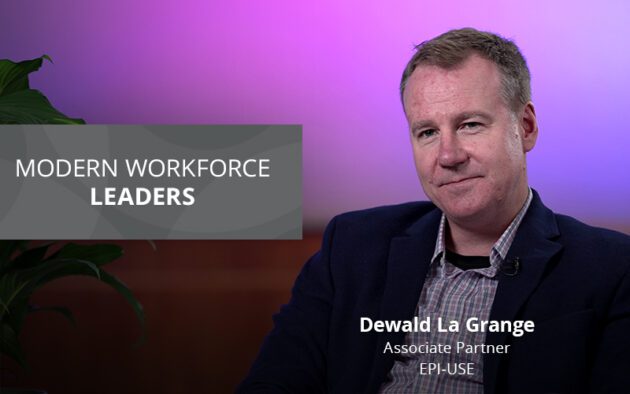
Dewald La Grange
Associate Partner
EPI-USE America, Inc.
Dewald serves as an Associate Partner with EPI-USE America, leading the WFM business for the last 9 years. A highly experienced ERP professional, he has two decades of experience in various roles and has managed implementation projects for the ADP WorkForce Suite, ADP Globalview and SuccessFactors Cloud solutions.

Since 2013, EPI-USE and WorkForce Software, an ADP company, have partnered together on more than 150 successful projects. Together, our experience in solving workforce management challenges spans over three decades.